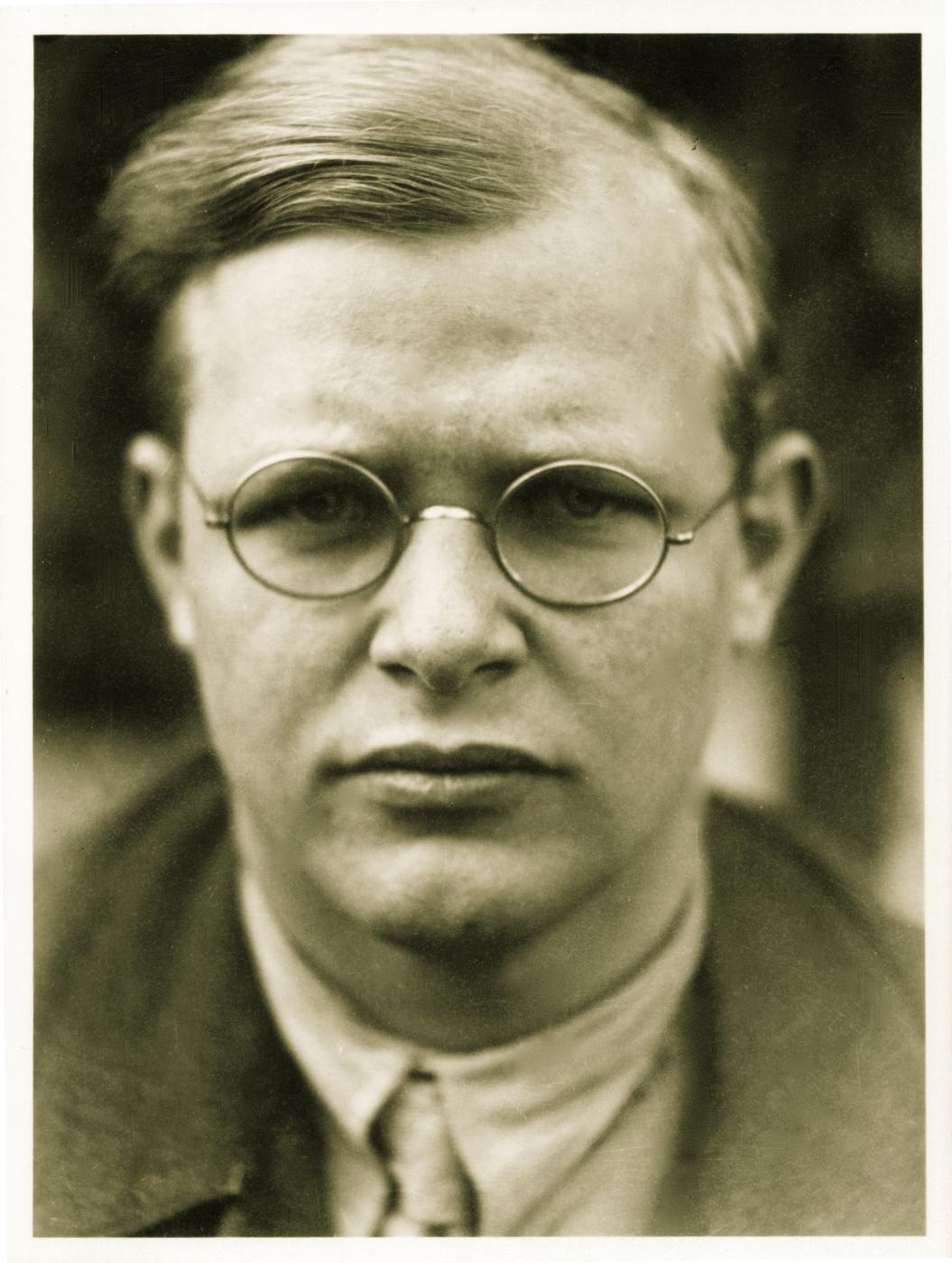
"We must never forget that most men only learn wisdom by personal experience." -Dietrich Bonhoeffer
"Psychologically, our lack of imagination, sensitivity and mental agility is balanced by a steady composure, an unruffled power of concentration and an immense capacity for suffering." -Dietrich Bonhoeffer
Understanding Our Human Limitations and God's Provision
Dietrich Bonhoeffer observes a fundamental truth about human nature: "We must never forget that most men only learn wisdom by personal experience." This is not merely a commentary on stubbornness or willful ignorance, but rather an honest assessment of our psychological makeup. Most people cannot truly grasp wisdom—the kind that shapes behavior and builds character—without walking through the fire themselves.
This limitation manifests in what Bonhoeffer identifies as a threefold deficiency: a lack of imagination, sensitivity, and mental agility. Without personal experience of hardship, we struggle to exercise precaution. We cannot avoid pitfalls we've never encountered because the wisdom to recognize and sidestep them comes only through the painful experience of failure. More troubling still, this experiential gap leaves us unable to genuinely sympathize or empathize with the suffering of others. We simply cannot feel what we have not, in some measure, experienced ourselves.
The Three Deficiencies Explained:
- Imagination - the ability to foresee and vividly understand our own potential suffering or that of others. Without experience, we lack the mental framework to truly envision what hardship looks like, feels like, or costs. We may intellectually acknowledge suffering exists, but we cannot imagine its weight.
- Sensitivity - the capacity to be emotionally attuned and responsive to the pain of others. Without having walked through our own valleys, we remain insulated from the suffering around us, unable to be moved by it in any meaningful way. Experience is the bridge that connects us to the pain of our fellow human beings.
- Mental Agility - the intellectual flexibility to learn from observation and others' experiences, rather than requiring direct personal suffering. This is the ability to quickly adapt our thinking and draw wisdom from indirect sources—to see someone else stumble and adjust our own path accordingly. It's the cognitive nimbleness that allows us to extrapolate lessons from the experiences of others rather than learning only through personal failure.
God's Balancing Grace:
Yet Bonhoeffer notes something remarkable: "Psychologically, our lack of imagination, sensitivity and mental agility is balanced by a steady composure, an unruffled power of concentration and an immense capacity for suffering." God does not leave us in a state of imbalance. As bearers of His image, we are afforded compensating strengths that enable us to navigate the very limitations He allows to remain:
- Steady Composure - Since we must learn through personal experience and suffering rather than vicariously, God grants us the emotional stability and inner equilibrium to endure the trials that will teach us. This composure is not stoic indifference but rather a deep-rooted steadiness that prevents us from being destroyed by the very experiences we need for growth. We can face our teachers—however harsh—without being shattered by them.
- Unruffled Power of Concentration - Because we cannot quickly adapt or learn from others (due to our lack of mental agility), God provides us with the ability to focus deeply and persistently on our own circumstances. This concentrated attention allows us to extract maximum wisdom from our direct experiences, however painful they may be. Where we lack breadth of learning, God gives us depth of focus. We may learn slowly, but we can learn thoroughly.
- Immense Capacity for Suffering - Since we require personal experience to gain wisdom rather than learning through imagination or sensitivity to others, God equips us with remarkable resilience to withstand the suffering that will inevitably come as our teacher. This capacity is not merely the ability to survive hardship, but to endure it long enough and deeply enough to be transformed by it. We are built to bear what we cannot avoid.
The Divine Design:
This is the paradox of human formation: God doesn't remove our need to learn the hard way, but He does ensure we can survive—and even thrive through—the hard lessons. Our intellectual and emotional limitations mean we must suffer to learn, but God mercifully ensures we possess the fortitude to bear that suffering without being crushed by it. We are simultaneously weak and strong, limited and equipped, vulnerable and resilient.
In this divine economy, suffering is not punishment but pedagogy. Our deficiencies are not design flaws but the very conditions that make experiential wisdom possible. And God's compensating gifts—composure, concentration, and capacity—are not merely coping mechanisms but the tools by which we are shaped into people capable of genuine wisdom, authentic empathy, and Christlike compassion.
Given the profound value that sympathy and empathy hold in God's economy and human history, we must ask ourselves: what should our response to suffering be?
The answer lies in understanding that sympathy and empathy are not merely emotional responses—they are the very heartbeat of God's relationship with humanity. "For God so loved the world..." (John 3:16). This divine love, expressed through Christ's sympathy for mankind and His empathy for our self-inflicted condition, is what drove Him from heaven to earth, from the manger to the cross. His ability to enter into our suffering, to feel it deeply, and to act decisively upon it forms the foundation of the gospel itself. It is impossible to overstate how central this is—sympathy and empathy are the practical outworking of God's love for us.
If this is true—if the capacity to suffer with and for others is so valuable that it motivated the incarnation and crucifixion—then our own suffering takes on profound meaning. When we suffer, we are not merely enduring hardship; we are being equipped to love as God loves. We are gaining the experiential wisdom that our natural deficiencies (lack of imagination, sensitivity, and mental agility) prevent us from acquiring any other way.
Therefore, our response to suffering should mirror Christ's response. Bonhoeffer writes that Christ did not passively resign Himself to suffering, nor did He avoid it. Instead, "He seized it with both hands as a free man, and mastered it." Christ approached suffering with intentionality and agency. He chose it freely, engaged it fully, and transformed it into the instrument of redemption.
We must do the same. Rather than resenting our suffering or merely enduring it with grim resignation, we should embrace it as the means by which God is developing in us the capacity for genuine sympathy and empathy—the very qualities that make us more like Christ and more useful in His kingdom. Suffering is not an interruption to our spiritual formation; it is the curriculum. Through it, we learn to love as we have been loved, to suffer with others as Christ suffered for us, and to become agents of His compassion in a broken world.


Comments