
“The important thing is to make the best use of one’s possessions and capabilities—there are still plenty left—and to accept the limits of the situation, by which I mean not giving way to feelings of resentment and discontent.” — Dietrich Bonhoeffer
This line still lands like a blow. It reframes the question that haunts most of us: Why am I here? Why do I exist? Underneath that abstract question almost always lies a more practical one: What am I supposed to do while I am here?
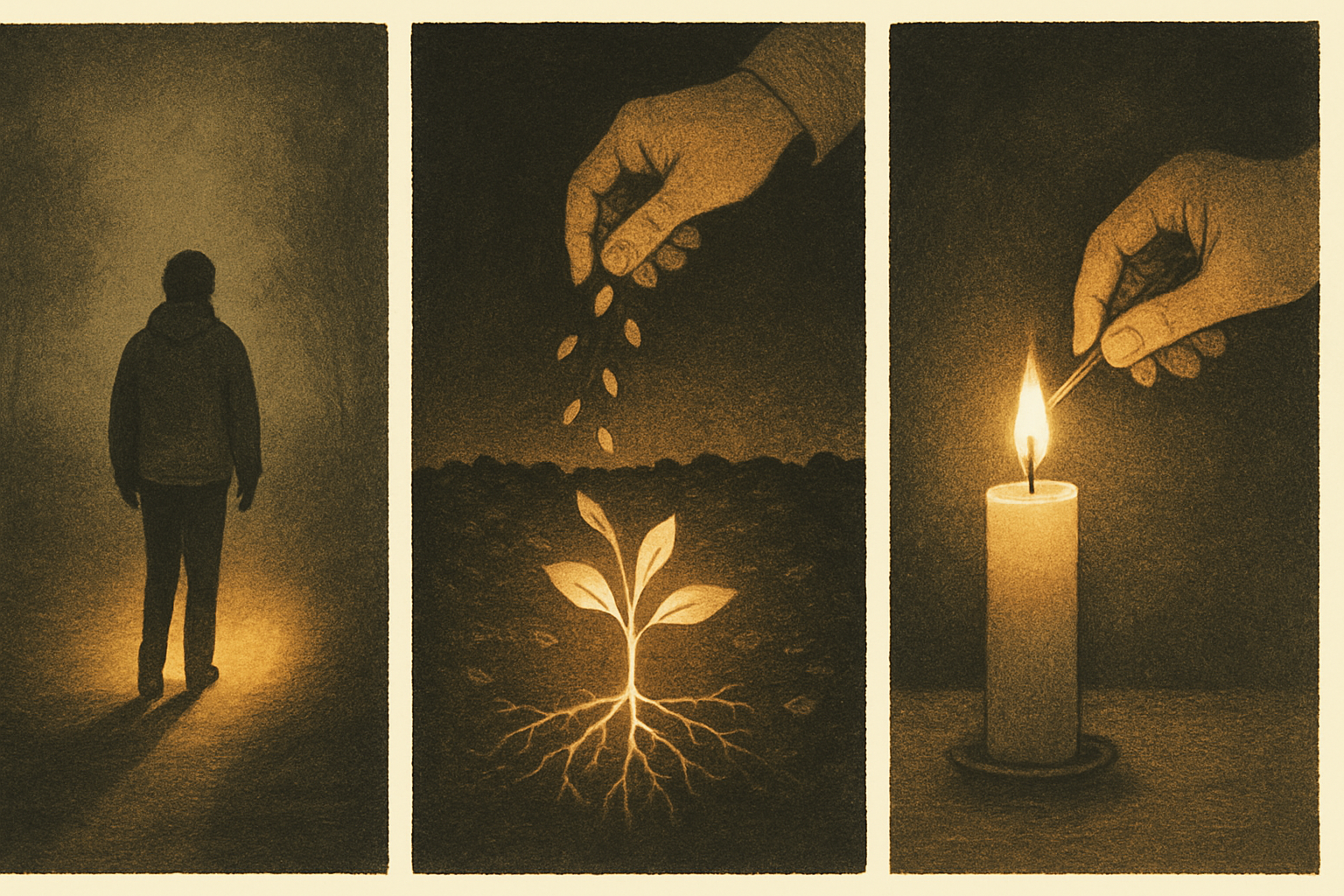
Bonhoeffer’s answer is disarmingly simple. Existence is not first about uncovering a grand, customized blueprint for your life. It is about using what you already have—your possessions, your capabilities, your circumstances—to take the concrete next step that lies right in front of you. The step might be almost invisible in its smallness, or it might be frightening in its risk and daring. Either way, the call is the same: take that step with the resources you have been given, and use them to their fullest.
What makes this so difficult is not usually a lack of resources but a refusal of limits. We resent the narrowness of our lives, the constraints on our time, our health, our opportunities, our intelligence, our money. Bonhoeffer presses on that sore spot: the crucial thing is not only to use what remains, but to accept the limits of the situation—and to do so without sliding into resentment or simmering discontent. To live within limits without bitterness is part of the vocation itself.
This ties back to what I once called the “divine simplicity of ignorance.” In that earlier reflection, I suggested that there is a kind of holy way of living that does not constantly demand to see the full architecture of God’s will. Instead, it simply does the next thing in front of it, in trust. It is a way of “blind” commitment—not in the sense of mindless obedience, but in the sense of gladly accepting that we are not the architect. We do not have to know how each small step, each quiet act of faithfulness, threads into the larger pattern. We only have to take the step.
This posture is profoundly unsatisfying to the egomaniac in each of us. We would rather be central characters in a sweeping narrative we can map and summarize. We want to see our lives as pivotal, our choices as decisive for history, our work as obviously strategic. Bonhoeffer’s counsel cuts across that craving. The answer to “Why do I exist?” may be far more humble and hidden than we would like: to take small, faithful actions with what we have, within the limits we did not choose, trusting that God weaves them into a will we cannot fully grasp.
In that sense, the simplicity of ignorance is not a retreat from responsibility but a different kind of responsibility. It is the responsibility of the steward rather than the sovereign, the servant rather than the strategist. My task is not to mastermind the story of my life but to be found using my possessions and capabilities—however meager or abundant—for the good set before me, without poisoning that work with resentment about what I do not have.
If that is true, then the great question of existence becomes smaller and sharper. Less: What is my grand purpose in the abstract? More: What has God already placed in my hands, and what is the next right thing to do with it, here, within these limits, without bitterness? The answer will often feel modest, ordinary, and unremarkable. But perhaps that quiet, obedient, limited work is exactly where the real answer to “Why do I exist?” is being lived out.
Comments