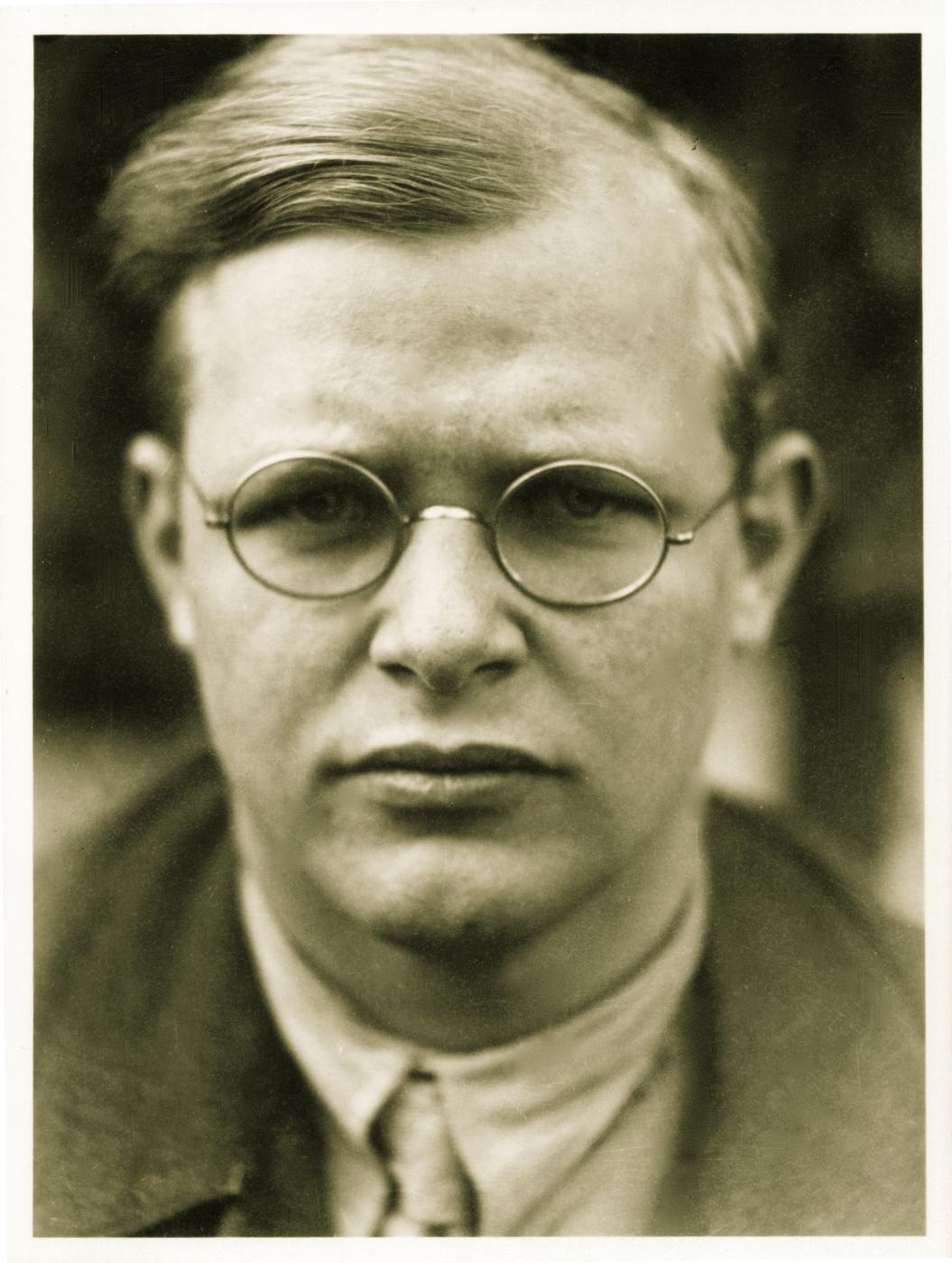
"Nobility springs from and thrives on self-sacrifice and courage and an unfailing sense of duty to oneself and society. It expects due deference to itself, but shows an equally natural deference to others, whether they be of higher or of lower degree. From start to finish it demands a recovery of a lost sense of quality and of a social order based upon quality... Culturally it [quality] means a return from the newspaper and the radio to the book, from feverish activity to unhurried leisure, from dissipation to recollection, from sensationalism to reflection, from virtuosity to art, from snobbery to modesty, from extravagance to moderation. Quantities are competitive, qualities complementary." -Dietrich Bonhoeffer
"Put to death therefore what is earthly in you..." -Colossians 3:5 (ESV)
"Do nothing from selfish ambition or conceit, but in humility count others more significant than yourselves. Let each of you look not only to his own interests, but also to the interests of others. Have this mind among yourselves, which is yours in Christ Jesus… he humbled himself by becoming obedient to the point of death, even death on a cross." -Philippians 2:3–8 (ESV)
The Call to Nobility
Bonhoeffer calls us toward nobility—a concept he contrasts sharply with what he terms "rabbleness." Where rabbleness abandons reserve and fails to honor the humanity, dignity, and autonomy of others, nobility maintains this sacred respect. But nobility is not passive politeness; it is rooted in three active commitments: self-sacrifice, courage, and duty to oneself and society.
At its heart, this nobility reflects the scriptural call to "put to death" our self-life so that we and others may gain true life. This is not mere moralism but a fundamental reorientation of the self away from the original sin that continues to plague humanity.
The Descent into Rabbleness: A Four-Stage Fall
1. Self-Deification: Claiming the Throne of God
The foundation of rabbleness—and indeed of the Fall itself—is humanity's persistent claim to be its own god. We position ourselves as the origin, arbiter, provider, and maintainer of our own lives. Unable to conceive of ourselves as anything other than supreme in our own existence, we inevitably elevate ourselves above others. This is not merely pride; it is the fundamental usurpation of God's place in our lives.
2. From Self-Worship to Judgment of Others
Once we assume this position of godliness, we naturally grant ourselves license to judge. We look down upon those around us, passing judgment on their decisions, behavior, and way of life. In our eyes, they become unworthy of respect—not as humans, not as God's creations, but as something less, something other.
For some, this passive contempt escalates into active aggression. Differences transform neighbors into enemies, and enemies become targets to be vanquished.
3. The Disenfranchisement of Human Rights
The natural consequence of this stance is the systematic denial of others' God-given rights. Those we deem "other" are no longer seen as creatures made in God's image, deserving of all opportunities afforded to them. Instead, they become subordinates who must accept whatever we deign to give them.
4. The Believer's Particular Temptation
For believers, this rabbleness manifests in two especially insidious ways:
- Complete separation from the "ungodly": We withdraw entirely from those we judge as falling short of godliness, abandoning the call to be salt and light in the world.
- Dehumanizing evangelism: We reduce people to objects—souls to be "saved" rather than humans to be loved. Evangelism becomes transactional, a numbers game divorced from genuine relationship and respect for the full humanity of those we claim to serve.
The Way Forward: Recovering Nobility Through Self-Death
True nobility, as Bonhoeffer envisions it, requires us to resist this descent at its very foundation. It is not a superficial adjustment of behavior but a radical reorientation of the self. This path demands both internal transformation and external practice:
1. Acknowledge Our Own Creatureliness and Abandon the Throne We've Claimed
The first step is the hardest: we must dethrone ourselves. This means recognizing that we are not the origin of our own lives, not the ultimate authority, not the measure of all things. We are creatures, not the Creator.
This acknowledgment is more than intellectual assent—it requires daily, moment-by-moment surrender. Every time we catch ourselves assuming we know best, every time we position ourselves as judge, every time we act as though our perspective is the only valid one, we must consciously step down from the throne we've claimed. This is what Scripture means by "putting to death" what is earthly in us: the constant, active choice to reject self-deification.
2. Extend to All People the Deference and Respect Due to Image-Bearers of God
If we are not God, then we must recognize who people truly are: image-bearers of the Divine, each one carrying inherent dignity and worth that we did not grant and cannot revoke. This respect is not conditional on agreement, behavior, or belief. It is foundational to their existence as God's creation.
Critically, this includes respecting their God-given autonomy—the right to choose a way that is not in line with God's way. God Himself honors human freedom, even when it leads to destruction. He does not coerce, manipulate, or force compliance. If the Creator grants this dignity to humanity, who are we to deny it?
This doesn't mean we abandon truth or cease to believe in right and wrong. Rather, it means we hold truth with humility, recognizing that transformation is God's work, not ours. We can speak truth, live truth, and invite others into truth—but we cannot and must not attempt to control or dominate others into conformity.
3. Engage with Others Not as Projects or Enemies, But as Fellow Humans Worthy of Dignity
This shift in perspective changes everything about how we relate to people. When someone is a project, they exist for our purposes—to be fixed, saved, or converted according to our timeline and methods. When someone is an enemy, they exist to be defeated, proven wrong, or kept at a distance.
But when someone is a fellow human worthy of dignity, they become a person to be known, understood, and loved. Their story matters. Their struggles are real. Their questions are legitimate. Their journey is their own.
This means we must:
- Listen more than we speak, seeking to understand before being understood
- Ask questions rather than deliver pronouncements, inviting dialogue rather than monologue
- Acknowledge complexity rather than reducing people to single issues or labels
- Remain present even when we disagree, rather than withdrawing or attacking
- Celebrate their humanity even when we cannot celebrate their choices
4. Embrace the Self-Sacrificial Love Modeled by Christ
Christ's humility was not weakness but the ultimate expression of strength—the choice to lay down power for the sake of others. He "humbled himself by becoming obedient to the point of death, even death on a cross." This is our model.
Self-sacrificial love means:
- Surrendering our need to be right in favor of being loving
- Giving up our comfort to enter into others' pain and struggle
- Releasing our agenda to make space for genuine relationship
- Bearing the cost of loving difficult people without demanding they earn our respect
- Dying to our reputation by associating with those society deems unworthy
This is costly. It will be misunderstood. Some will see our respect for others' autonomy as compromise. Some will see our refusal to judge as moral weakness. Some will see our willingness to associate with "sinners" as endorsement of sin. But this is precisely the path Christ walked, and it is the only path to true nobility.
The Fruit of Nobility
This is the nobility that springs from putting to death what is earthly in us—not so we can claim moral superiority, but so we can finally see and honor the humanity in everyone around us.
When we walk this path, something remarkable happens: we stop being obstacles to grace and start becoming conduits of it. People no longer experience us as threats to be defended against, but as safe spaces where their full humanity is honored. And in that safety, in that respect, in that genuine love, the Spirit of God has room to work in ways our coercion and judgment never could.
This is not a retreat from truth or conviction. It is, rather, the only way those things can be offered as gifts rather than weapons. It is the recovery of what Bonhoeffer called "reserve"—that sacred respect for the mystery and dignity of another human soul, even when we long for them to choose differently.
In the end, nobility is not about being better than others. It is about finally seeing others clearly—as God sees them—and treating them accordingly.


Comments