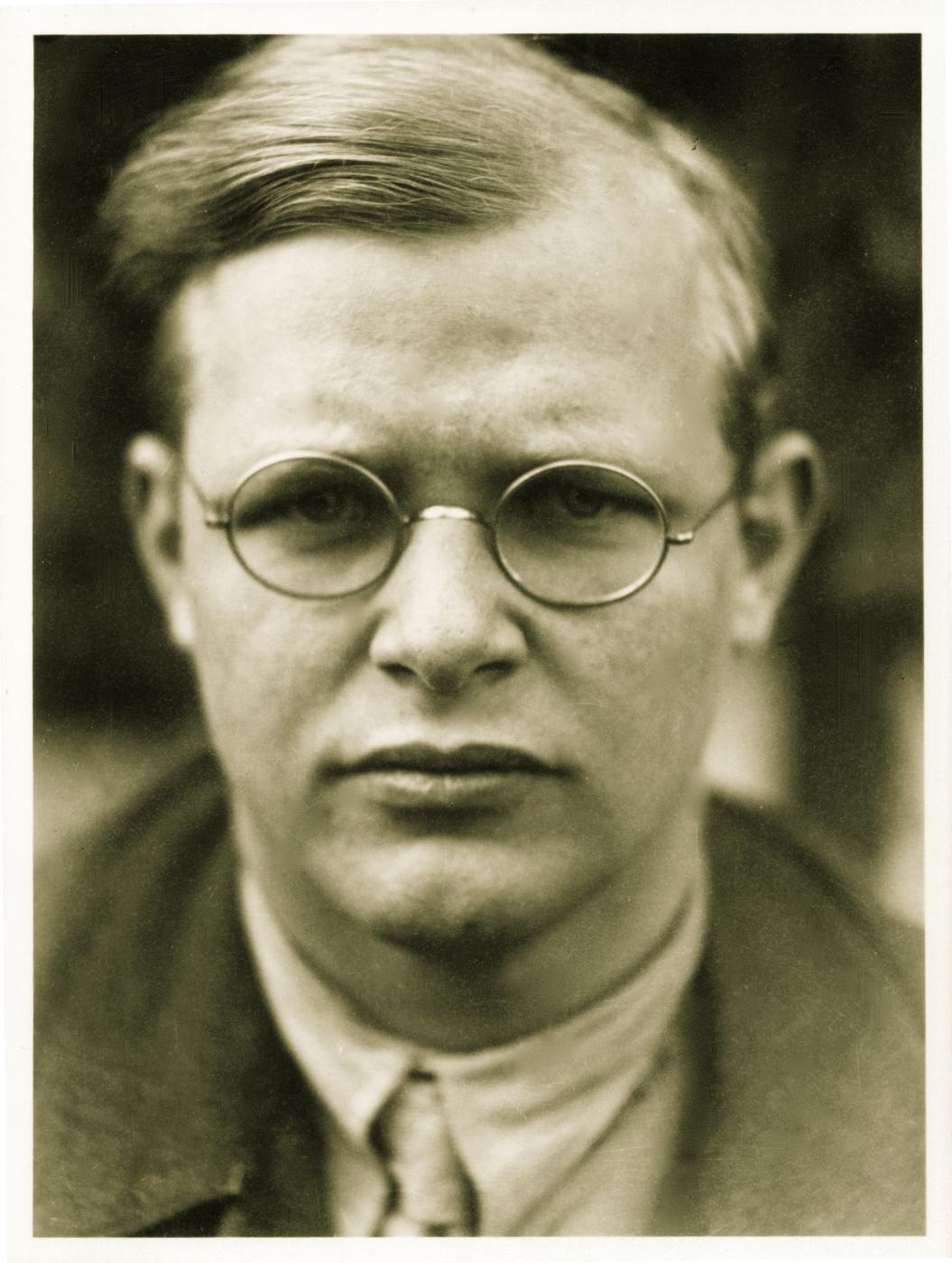
"Unless we have the courage to fight for a revival of a wholesome reserve between man and man, all human values will be submerged in anarchy." -Dietrich Bonhoeffer
Galatians 6:2, 5 - "Bear one another's burdens, and so fulfill the law of Christ... For each will have to bear his own load."
At first glance, Bonhoeffer's use of "reserve" may seem puzzling. He employs an archaic meaning of the word: restraint, reticence, or proper boundaries in personal behavior and relationships—a sense of appropriate distance, dignity, and respect between people. This encompasses restraint in words and actions, the maintenance of proper boundaries and personal space, respectful recognition of others' dignity and autonomy, and self-restraint in expression and bearing.
Given the context of Bonhoeffer's broader writings, he focuses particularly on recognizing the dignity and autonomy of others. In practice, this means holding the tension between deep engagement and respectful boundaries—the very tension Paul articulates in Galatians 6. When Paul instructs us to "bear one another's burdens," he calls us to deep, sacrificial engagement with others' struggles. Yet in the same breath, he reminds us that "each will have to bear his own load"—acknowledging that every person has their own responsibility, their own moral agency, their own dignity that must not be violated.
This is not a contradiction but a profound wisdom about human relationships. There are burdens too heavy for one person to carry alone—crises, griefs, overwhelming circumstances—and in these moments, we are called to step in with compassionate support. But there are also loads that belong to each individual—their daily responsibilities, their moral choices, their personal growth—and to take these from them would be to strip them of their dignity and autonomy.
In this way we embed ourselves in humanity's life through genuine fellowship (bearing burdens) while maintaining reserve through respect for autonomy (allowing each to bear their own load). We take responsibility for shaping history while refusing to become oppressors who strip others of their moral agency. We love people enough to truly know them and support them in their crises, while respecting their dignity enough not to violate their boundaries, take over their lives, or reduce them to objects of our religious ambitions.
This is the pattern of Christ: fully present, deeply engaged, bearing the ultimate burden of our sin, yet never manipulative, never violating human dignity, always respecting the freedom and autonomy of those He came to save. He invites but never coerces. He offers but never forces. He bears our burdens while still calling us to take up our own cross and follow Him.
Why the Loss of Reserve Results in Anarchy
But why does the loss of this reserve result in anarchy? What does this anarchy look like, and how does it relate to the believer's role in this world? Bonhoeffer provides the fuller context:
"Unless we have the courage to fight for a revival of a wholesome reserve between man and man, all human values will be submerged in anarchy. The impudent contempt for such reserve is as much the mark of the rabble as interior uncertainty, as haggling and cringing for the favour of the insolent, as lowering oneself to the level of the rabble is the way of becoming no better than the rabble oneself. Where self-respect is abandoned, where the feeling for human quality and the power of reserve decay, chaos is at the door. Where impudence is tolerated for the sake of material comfort, self-respect is abandoned, the flood-gates are opened, and chaos bursts the dams we were pledged to defend. That is a crime against humanity."
The Manifestation of Anarchy
According to Bonhoeffer, the anarchy resulting from lost reserve manifests in several interconnected ways:
The Leveling Down of All Distinctions
We witness not equality before God, but the destruction of quality, dignity, and proper order. This represents the rabble's contempt for excellence, for boundaries, for the recognition that people possess inherent worth demanding respect. When we lose the ability to distinguish between bearing another's burden (appropriate intervention) and carrying their load (inappropriate takeover), we destroy the very distinctions that protect human dignity.
The Triumph of the Rabble
The "rabble" is characterized by impudent contempt for reserve—violating boundaries without shame; interior uncertainty—lacking any stable sense of self or dignity; haggling and cringing for favor—manipulating and debasing oneself for advantage; and lowering oneself to the rabble's level—abandoning one's own dignity to fit in. When reserve is lost, everyone becomes "no better than the rabble." The rabble respects no boundaries, dignity, or autonomy—they see everything as available for exploitation, manipulation, or violation. They either refuse to bear any burdens (abandoning others in their need) or they insist on carrying everyone's loads (stripping others of their agency and responsibility).
The Collapse of Self-Respect
"Where self-respect is abandoned, where the feeling for human quality and the power of reserve decay, chaos is at the door." Without reserve, people lose the ability to maintain their own dignity, the capacity to recognize quality and excellence, the power to resist being used or manipulated, and the strength to stand apart from the crowd. This connects directly to Bonhoeffer's earlier discussion of folly—when people surrender their "inner independence and autonomous selfhood," they become tools. The loss of reserve is part of this same dynamic: people without boundaries cannot maintain their humanity. They can neither bear their own load with dignity nor appropriately help others bear theirs.
The Destruction of Human Values
When there are no boundaries, no respect for dignity, no recognition of quality, then truth becomes whatever is loudest; excellence is mocked as elitism; dignity is seen as pretension; boundaries are viewed as barriers to be torn down; everything sacred is profaned; and nothing is protected from violation. The Pauline balance collapses—we either abandon people to carry impossible burdens alone, or we smother them by refusing to let them carry their own loads. Both extremes destroy human dignity.
Cultural Degradation
Bonhoeffer describes what the loss of quality and reserve produces culturally—a reversal of the path toward human flourishing: shallow media replaces deep reading; constant busyness replaces contemplation; scattered attention replaces focus; shock value replaces thoughtfulness; technical skill without depth replaces true artistry; pretension replaces genuine humility; and excess replaces balance. We lose the wisdom to know when to step in and when to step back, when to engage and when to give space, when to bear burdens and when to let others bear their own loads.
The Believer's Calling in This Context
Bonhoeffer argues: "In other ages it may have been the duty of Christians to champion the equality of all men. Our duty to-day, however, is passionately to defend the sense of reserve between man and man."
Context matters. In Nazi Germany, Bonhoeffer witnessed the violation of human dignity on a massive scale, the reduction of people to tools of the state, the destruction of boundaries between public and private, the invasion of every sphere of life by totalitarian power, and the loss of individual autonomy and moral agency. The totalitarian state refused to recognize the distinction Paul makes in Galatians 6—it claimed the right to control not just the burdens people faced but the very loads that belonged to each individual's conscience and responsibility. The anarchy he describes is not mere disorder—it is the chaos that results when human beings are no longer treated as beings with inherent dignity, autonomy, and boundaries that must be respected.
The Paradox of Anarchy
The anarchy Bonhoeffer warns against is deeply paradoxical. It appears as radical openness, equality, and the breaking down of barriers, but it actually results in the destruction of genuine human connection (because connection requires boundaries); the loss of human dignity (because dignity requires respect for autonomy); the triumph of manipulation and exploitation (because without reserve, everything is available for use); and the collapse of moral order (because morality requires the capacity to say "no," to maintain boundaries, to resist violation).
The anarchy is not too much order, but too little—specifically, the loss of the order that protects human dignity through proper boundaries and reserve. It is the loss of the wisdom Paul demonstrates: knowing when to bear another's burden and when to respect that each must bear their own load. This is why believers must courageously defend reserve: not as cold distance or indifference, but as the very foundation that makes genuine love, respect, and human flourishing possible. Reserve is what allows us to be fully present without being controlling, deeply engaged without being manipulative, sacrificially loving without being oppressive. It is the space in which true Christian fellowship—burden-bearing that respects load-carrying—can flourish.

Comments