
Newbigin describes a measure of agnosticism as central to the integrity of Christian witness. That sentence alone is enough to make a lot of Christians uncomfortable, because we have been trained to hear agnosticism as the opposite of faith. But Newbigin is not talking about the kind of agnosticism that shrugs and walks away from the question. He is talking about the kind that refuses to pretend we have arrived at the end of knowing.
The apophatic tradition in theology has always insisted that no human image or concept can grasp the full reality of God. This is not some fringe mystical idea. It runs through the entire tradition, from the Cappadocian Fathers to Aquinas to the Reformed confessions. God reveals himself truly, but he does not reveal himself exhaustively. There is always more. The bush burns and is not consumed. Moses sees the back of God, not the face. Paul tells us we see through a glass dimly. These are not admissions of defeat. They are descriptions of what it is like to stand before a reality that is greater than our capacity to contain it. And Newbigin's point is that this posture, this willingness to say "I do not yet know everything," is not a weakness in our witness. It is the very thing that makes our witness credible. The moment we claim to have God fully mapped, we have stopped talking about God and started talking about an idol we built out of our own certainty.
Think about it in terms of boundary events. I have used this idea before in these notes, the concept that at the edges of any discipline's knowledge, there are events or realities that mark the limit of what can be observed or verified from within that discipline's framework. The resurrection is the boundary event for Christianity. We can point to it. We can testify to its reality. We can trace its effects through history and in our own lives. But we cannot get behind it or above it in a way that would let us see the full picture of what God is doing. It is, as the word implies, at the boundary. And acknowledging that is not a concession. It is honesty.
What interests me is what Newbigin does next. He insists that this continuous learning, this pressing forward into deeper understanding, must go on within the framework of the tradition. This is where a lot of people get off the bus, because they hear "tradition" and think he means rigidity, or blind deference, or the refusal to ask hard questions. He means the opposite. He means that learning requires a context. Discovery does not happen in a vacuum. It happens inside a community that shares a language, a set of assumptions, a history of inquiry, and a commitment to testing what it thinks it knows against what it encounters.
And this is where the parallel to science becomes unavoidable, because science works exactly the same way. The empiricist does not wake up each morning and decide from scratch what counts as evidence. She inherits a tradition, the scientific method, the accumulated body of peer-reviewed research, the conventions of experimentation and replication, and she works within that tradition to push the boundaries outward. When she encounters an anomaly, she does not throw out the method. She uses the method to make sense of the anomaly. Sometimes that process leads to a paradigm shift, a fundamental reordering of how a field understands its subject matter. But even paradigm shifts happen from within. They happen because someone inside the community of inquiry noticed that the existing framework could not account for what they were observing, and they proposed a new framework that could. The tradition is not the enemy of discovery. It is the laboratory in which discovery becomes possible.
Newbigin is making the same claim about Christianity. The gospel, the scriptures, the creeds, the sacraments, the worshiping community, these are not walls designed to keep questions out. They are the structure within which questions can be asked productively. A physicist who abandons the scientific method has not freed herself to discover new truths. She has cut herself off from the tradition that makes discovery meaningful. A Christian who abandons the tradition has not freed herself to find God on her own terms. She has walked out of the laboratory and into the parking lot.
Now I need to pause here and address something, because I can feel the objection forming. If I am saying that both Christianity and science are traditions operating within their own frameworks, each with their own boundary events and their own honest acknowledgment of limits, does that not land us right back in the pluralist problem? Is this not just a sophisticated way of saying they are both equally valid perspectives, neither one more true than the other, and we are back to the relativism Newbigin has spent the entire chapter dismantling?
No. And the distinction matters.
What I am describing is not a demotion of Christianity to one option among many. It is the removal of a false competition. For decades, the popular framing has forced faith and science into a cage match, as though they are rival explanations for the same set of questions. They are not. They never were. Science asks how things work. It describes mechanics, processes, the behavior of matter and energy across time. It does this extraordinarily well, and it does it within a tradition of inquiry that has earned its credibility through centuries of rigorous, self-correcting practice. The gospel asks what things mean. It interprets the story. It tells us why there is something rather than nothing, who stands behind the narrative of creation and history, and what all of it is moving toward.
These are not competing answers to the same question. They are answers to different questions about the same reality. Saying that science operates within a tradition and has its own boundary events is not saying science is "just another perspective" that we can take or leave. It is saying that science, like every other human discipline, has a scope. It is powerful within that scope and honest about where that scope ends. And Christianity, rather than trying to invade science's scope and beat it at its own game, has its own scope, one that addresses the questions science is not equipped to answer. Not because science is deficient, but because meaning, purpose, and the nature of God are not the kinds of things that show up under a microscope. They never will. That is not a limitation of the microscope. It is a recognition that reality has more than one dimension.
So the conviction that God is the only way does not soften in this framing. It actually gets clearer. When you stop forcing the Bible to compete with a physics textbook, the Bible is free to do what it has always done, which is tell the story of God's action in history and invite you into it. The resurrection is not a hypothesis to be tested in a lab. It is an event that happened in the world, and it reordered everything. The claim that Jesus is the way, the truth, and the life is not a scientific claim that needs peer review. It is a declaration about the nature of reality itself, made from within the tradition that has carried and been shaped by that event for two thousand years. And it stands or falls on its own terms, not on whether it can also explain the fossil record.
This is what Newbigin means when he sets the playing field level. He is not saying all players are equal. He is saying everyone is playing on the same field, which is to say, everyone is operating within a tradition, everyone has presuppositions, and nobody has access to a view from nowhere. The pluralist wants to stand above all traditions and adjudicate between them from neutral ground. Newbigin says that neutral ground does not exist. But that does not mean all traditions are equally true. It means the conversation about which tradition best accounts for the whole of reality, nature, history, human experience, and the person of Christ, is a real conversation that can be had honestly. And the Christian enters that conversation not with a defensive crouch but with a confident claim, tested by two millennia of lived witness, that the story told by the gospel makes more sense of the whole than any alternative on offer.
I did not always see it this way.
I grew up in evangelical culture, and like a lot of people in that world, I was taught to be suspicious of science. Evolution was the enemy. The earth was six to eight thousand years old. Any claim to the contrary was not just wrong, it was dangerous. It was a threat to the authority of Scripture itself. The logic was airtight in its own way: if Genesis says God created the world in six days, and science says the universe is fourteen billion years old, then one of them has to be wrong. And it cannot be Genesis. So science must be wrong. Or compromised. Or driven by an agenda. Whatever the explanation, the point was clear. Science was on the other side.
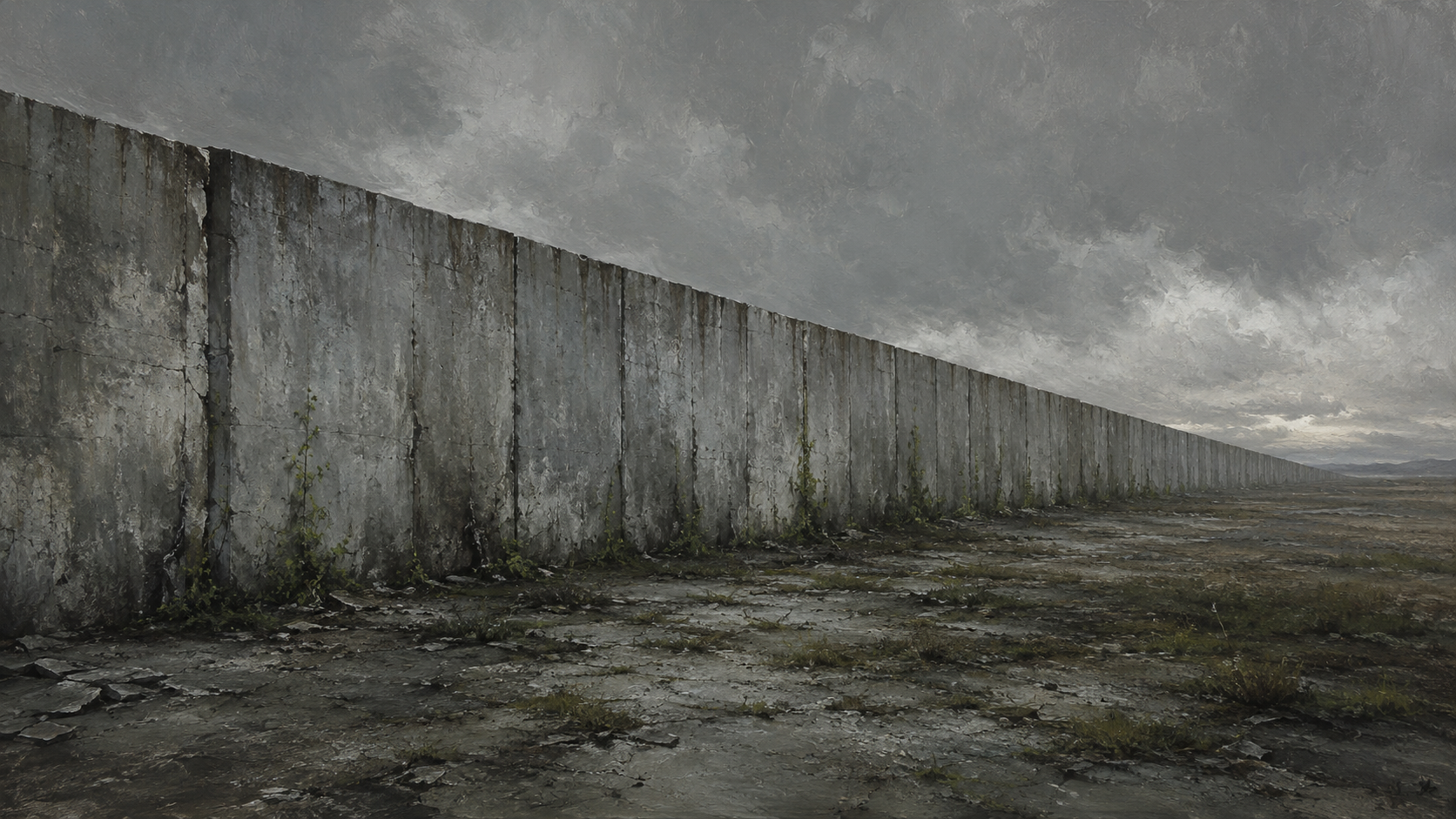
It took me a long time to realize that the thing I was protecting was not the faith. It was a particular framework for holding the faith, one that required the Bible to do things the Bible was never designed to do. It needed Genesis to function as a cosmology textbook. It needed the six days to be literal twenty-four-hour periods. It needed the genealogies to add up to a young earth. And when any of those pieces were questioned, the whole structure felt like it was under attack, because in that framework, it was. If one brick moved, the wall came down.
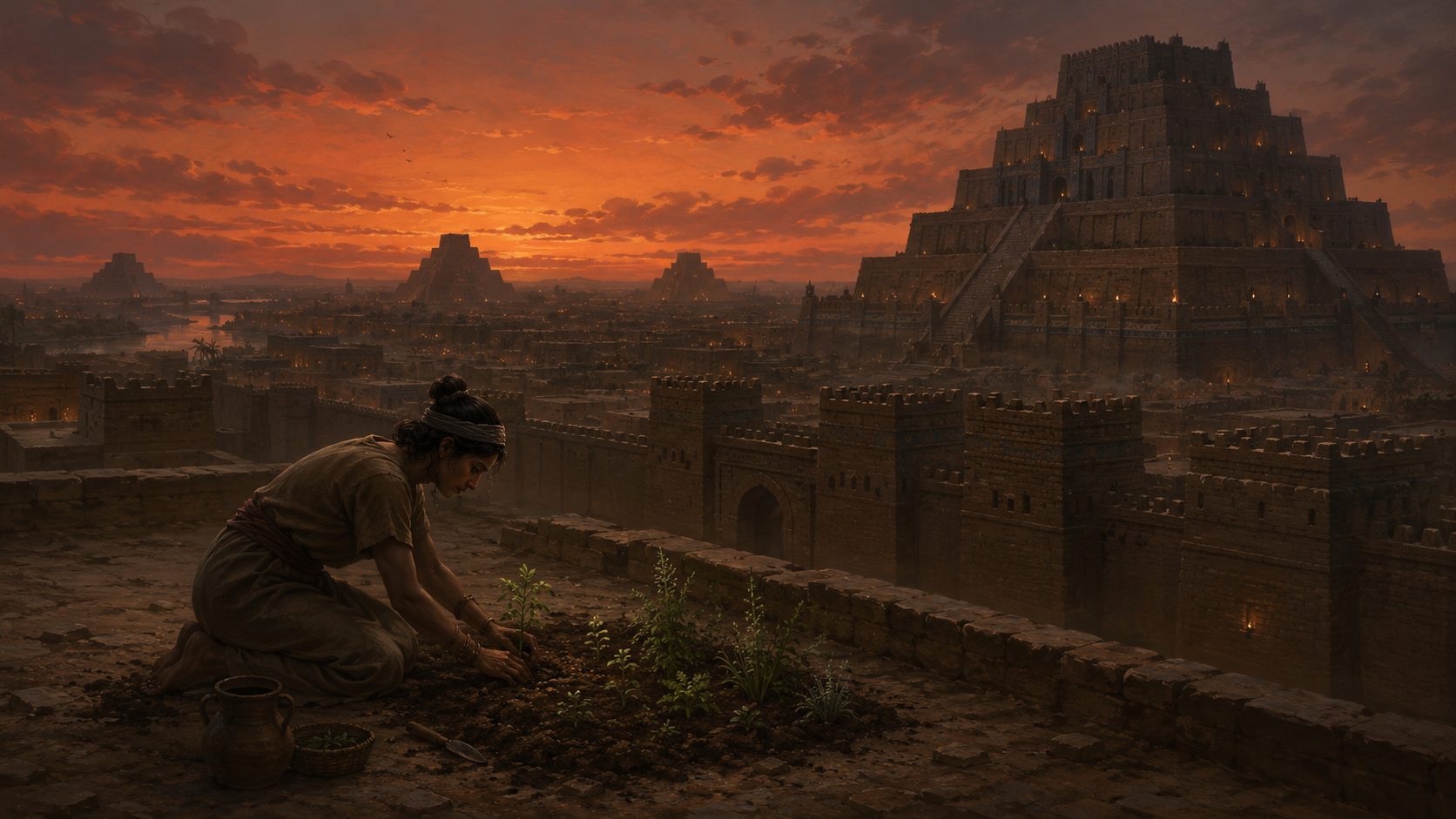
But the wall was not the faith. The wall was a theological system built on the assumption that the Bible must compete with science on science's terms and win. And that assumption was never necessary. It was never even biblical, if we are being honest about what the scriptures are actually doing. Genesis is not a lab report. It is a theological declaration, that God is the source of all that exists, that creation is purposeful, that humanity bears the image of its Creator. These claims do not depend on the age of the universe any more than the meaning of a poem depends on the type of paper it is printed on.
When that old framework finally gave way for me, what I found underneath it was not doubt. It was relief. And then, gradually, it was a deeper and more honest kind of belief.
The Big Bang did not explain away Genesis. It described, in remarkable detail, how God did this thing he calls creation. There was nothing, and then there was something, and that something was set in motion with a precision that still staggers the physicists who study it. At this point we have a pretty good sense that the Big Bang happened, or at least it is the best boundary event cosmology can offer us right now. The equations work. The background radiation is there. The expansion is measurable. And we need to accept that. Not grudgingly, not as a concession to a hostile discipline, but as the honest posture of people who believe that all truth is God's truth and that reality is not going to contradict itself.
The same goes for evolution, for the age of the earth, for the geological record, for the whole sweep of what the natural sciences have uncovered over the past several centuries. None of it threatens the gospel. None of it renders the resurrection less real. What it does is fill in the picture of how God works, patiently, intricately, across deep time, through processes that are elegant and brutal and astonishing all at once. When you stop needing science to be wrong, the world gets larger, not smaller. The Creator gets more interesting, not less.
Newbigin lands the chapter in a place that pulls all of this together. He writes that the Christian faith is primarily to be understood as an interpretation of the story, the human story set within the story of nature, and that our dialogue with the modern world should be as much with the historians as with the natural scientists. This is a critical reframing. He is not saying that Christianity and science are the same kind of enterprise. He is saying they are different enterprises reading different dimensions of the same reality. Science describes the mechanics. The gospel interprets the meaning. They are not in competition because they are not answering the same question.
The evangelical mistake is to force the Bible into science's lane, making it a rival hypothesis that has to defeat every new discovery to remain credible. The secularist mistake is the mirror image, treating science as though it renders theological interpretation unnecessary, as though describing how a thing works is the same as explaining why it matters. Newbigin refuses both moves. He sets the playing field level and says: everyone is working within a tradition, everyone has boundary events they cannot see past, and the question is not who has escaped all frameworks but whose framework makes the most coherent sense of the whole.
And then there is this line, which I think is the best thing in the chapter. Newbigin writes that when Christians affirm Jesus as the way, the true and living way, they are not claiming to know everything. They are claiming to be on the way, and inviting others to join them as they press forward toward the fullness of the truth, toward the day when we shall know as we have been known.
That last phrase is Paul, from 1 Corinthians 13. The partial gives way to the complete. The dim glass gives way to face-to-face seeing. Newbigin is saying that the Christian posture is one of confident incompleteness. We are not claiming arrival. We are not claiming to have the whole picture. We are claiming to know which road we are on and who we are walking toward. The confidence is in the direction, not in having reached the destination. And the fullness, the day when all of this resolves into clarity, is ahead of us, not behind us.
So here is the question worth sitting with, and I think it is the question that cuts through a lot of the noise. Do you see your faith as something that must be defended against every new discovery, something fragile enough that a telescope or a fossil could undo it? Or do you see it as something sturdy enough to welcome inquiry, two traditions, each honest about their limits, each working within their own frameworks, both oriented toward a reality that neither one fully possesses?
Because if the gospel is true, if the resurrection really happened, if Christ really is who he said he is, then no discovery is going to undo that. The truth does not need to be protected from inquiry. It invites it. Christians are, or should be, learners to the end of their days.

Comments