Here is the strange thing the modern settlement never quite admits. It did not defeat meaning. It contained it.
Newbigin spends this chapter showing how the cosmos got factualized, how purpose and value were evicted from the realm of public knowledge and the universe was reduced to a happening of chance describable by physics and nothing more. But notice what did not happen. Value did not actually go away. People did not stop living by it. The same culture that declared the universe meaningless went right on loving its children, mourning its dead, calling some things just and others monstrous, and treating its own existence as though it mattered. The values persisted. They were too stubborn to kill. So they were not killed. They were quarantined.
That is the move. The modern mind, unable to defeat meaning and unwilling to grant it standing among the facts, partitioned the world in two. On one side, a realm of valueless facts, public, certain, binding on everyone, the domain of real knowledge. On the other, a realm of values without facts, private, optional, binding on no one, the domain of mere preference. Religion got filed on the second shelf. So did meaning, purpose, and the question of what any of it is for. They were not refuted. They were relocated to a sealed room where they could be felt but never allowed to make a public claim, where a man could hold them as deeply as he liked so long as he agreed they were only his.
I keep reaching for a word to name this, and the word that keeps coming is one I know from a different field entirely.
In February of 1946, a State Department officer in Moscow named George Kennan, sick in bed with the flu, sent Washington a telegram of some five thousand words. The following year he refined it into an anonymous article in Foreign Affairs, signed only "X." Out of it came the defining doctrine of the next forty years: containment. The premise was that the Soviet system could be neither rolled back by force nor safely tolerated, so the task was to hem it in, deny it room to expand, hold the line patiently, and trust that what was sealed inside would in time collapse under its own contradictions. You could not defeat the thing. You could not live with it. So you built a wall around it and waited.
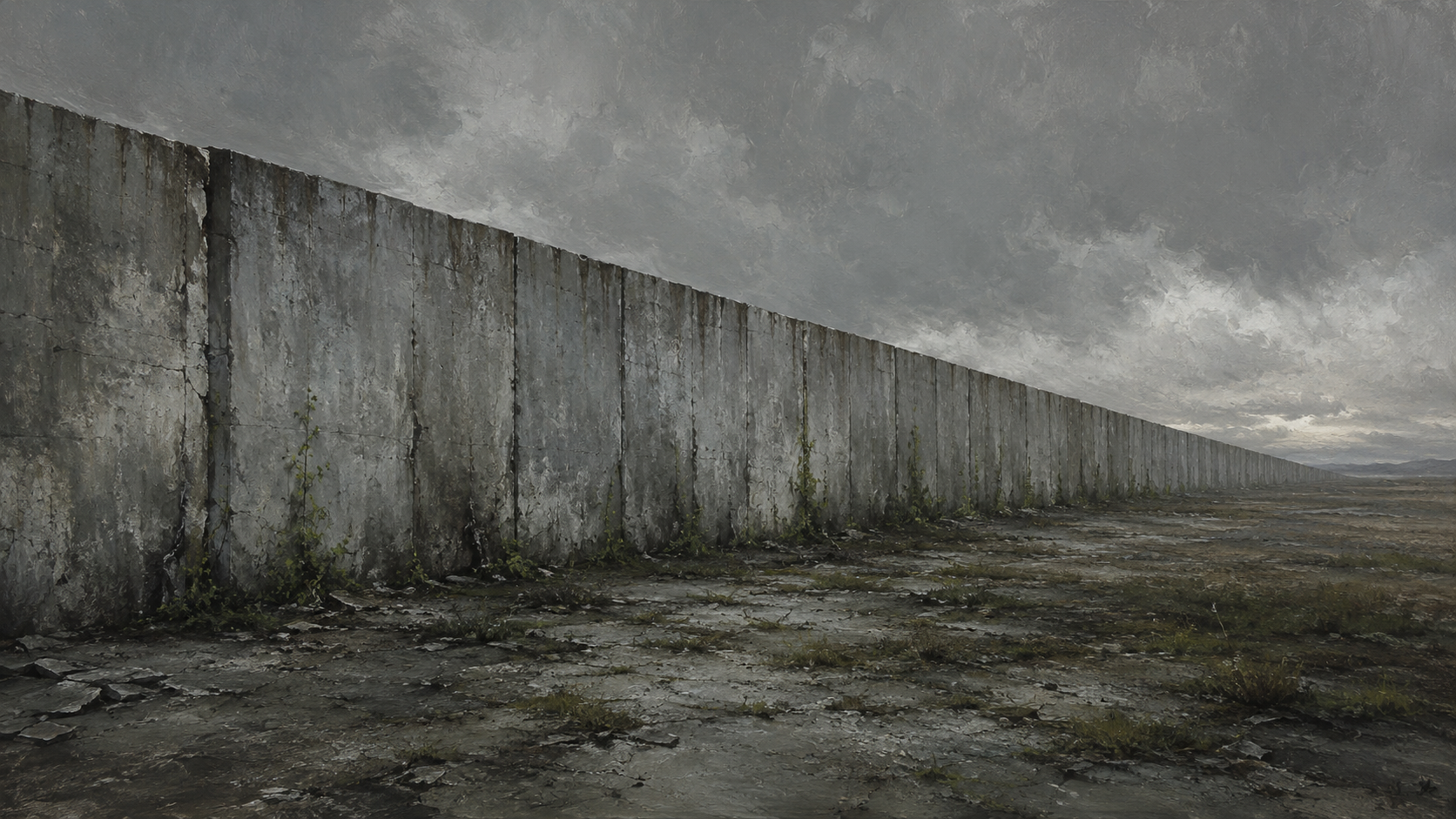
The fact/value split is containment turned inward, applied not to an empire but to meaning itself. Modernity could not defeat value, it kept pressing back into life no matter how thoroughly the cosmos was declared empty. And it could not openly tolerate value in the public realm of fact without surrendering the whole factualized universe it had built. So it did the only thing left. It contained it. Wall meaning into the private sphere, deny it any standing in the public square, and trust that what is sealed in the zone of preference cannot contaminate the facts. The privatization of religion is the iron curtain of the modern mind, and like the real one it is more porous, and more temporary, than its architects believed.
The parallel runs deeper than the strategy, though, and this is the part that stopped me. Kennan's doctrine carried a tragic irony its author came to see. He had argued for something nuanced, a selective and patient resistance, a careful choosing of where to stand. What he wrote, though, dressed a deeply felt and frankly fearful conviction in the language of cool realism. The telegrams crackled with emotion even as they claimed the authority of pure dispassionate analysis, and that costume of neutrality was part of why they carried such force. Kennan watched the doctrine harden and militarize into something he never intended, and he spent much of the rest of his life in regret over what his own framing had loosed.
That is the fact/value split exactly. It too is a committed, fearful posture wearing the costume of cool reason. The decision to wall meaning out of public knowledge is not itself a finding of public knowledge. It is a choice, a prior commitment, the same wager we have been tracing through this whole chapter, the determination that the cosmos must be impersonal and that anything resisting that determination must be filed under preference. And like Kennan's doctrine, it claims to be the verdict of dispassionate realism while actually being a value judgment of the most far-reaching kind. The partition presents itself as neutral. It is the least neutral thing in the building. It is a containment policy that has forgotten it is a policy and now mistakes itself for a map of reality.
This is where the whole chapter has been driving, and it is why the leveling Newbigin performs matters so much. Once you see that the fact/value split is not a discovery but a doctrine, not the cool conclusion of inquiry but a fearful commitment dressed as one, the wall loses its claim to be the natural border of the world. It is revealed as what it always was, a strategy for managing something that could not be defeated and would not be admitted. And strategies, unlike laws of nature, can be questioned. They can also fail.
Newbigin's wager, and increasingly mine, is that this one is failing. Meaning keeps pressing back into the public square because it was never actually private. Purpose keeps reasserting itself because the cosmos was never actually empty. The values we were told to keep in the sealed room keep leaking out under the door, because a human being cannot finally live as though his own life were a valueless fact among valueless facts. The containment held for a while. It is not holding now. And the thing about every containment doctrine, the lesson Kennan's century taught at enormous cost, is that the wall is never the end of the story. It is a holding action against a reality that outlasts it. Sooner or later the thing behind the wall is still there, still pressing, still true, and the only question left is what you will do when the wall comes down.


Comments