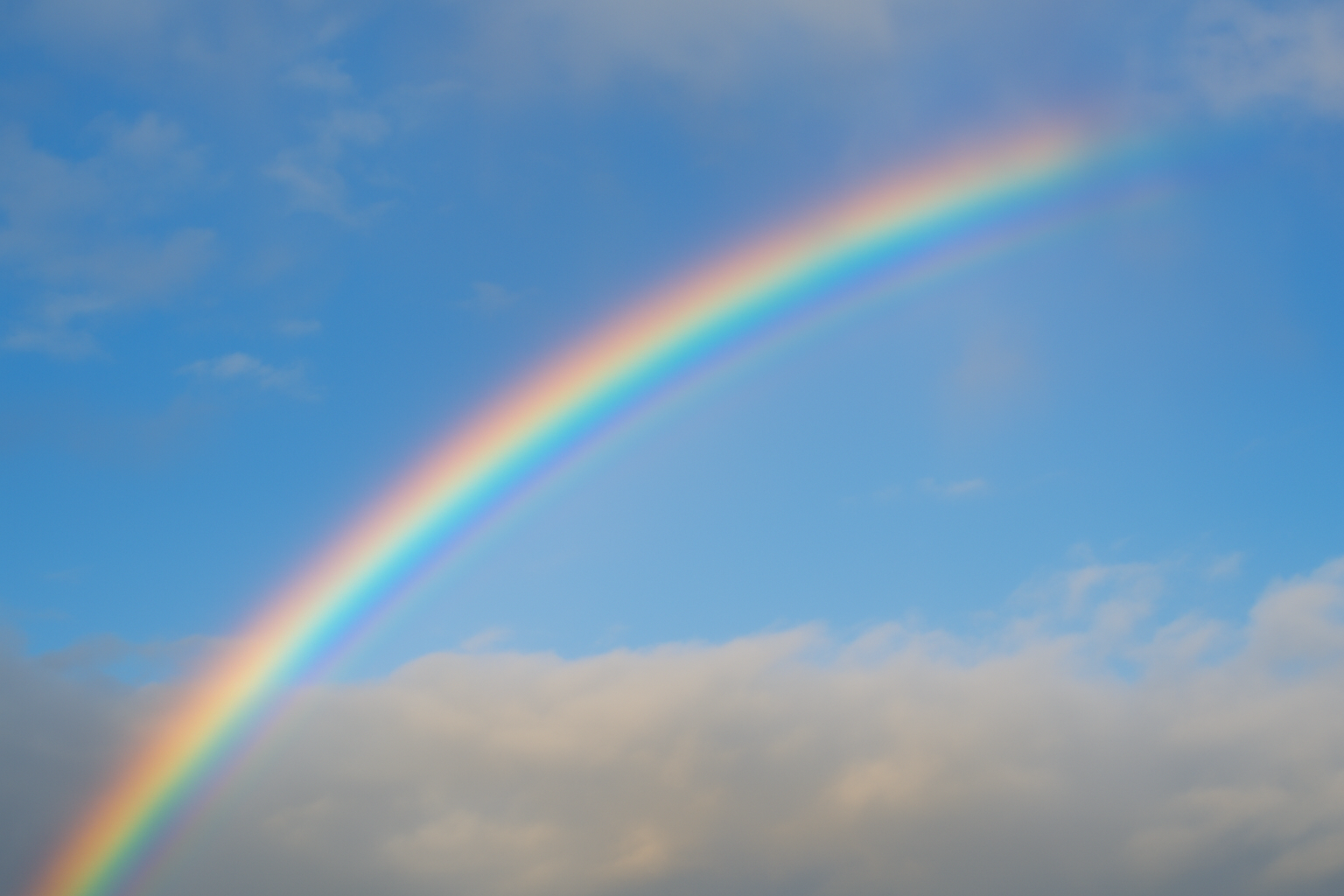
“I have set My rainbow in the cloud, and it shall serve as a sign of a covenant between Me and the earth.”
— Genesis 9:13 (NASB 2020)
The first time the rainbow appears in Scripture, it comes on the heels of judgment. The flood has receded. The ark has come to rest. Noah and his family step onto a cleansed earth that still smells of judgment and newness. Into that moment, God speaks a promise: never again will a flood destroy all flesh. As the sign of that covenant, God sets His bow in the clouds.
The rainbow is so familiar that it can easily become vague in our imagination, a soft and sentimental symbol of hope. But the image in Genesis is sharper than that. It is not just a pretty arc of colors. It is a weapon at rest.
The Hebrew word used here is the ordinary word for a war bow. The bow God “sets” in the sky is the same kind of bow an archer would string to send arrows into an enemy. That raises a deeper question: if the flood has just revealed God’s judgment against sin, how can God promise never again to destroy the earth in that way? What happens to His righteous anger? Where does it go?
The Direction of the Bow
Here the shape of the rainbow matters. A drawn bow, ready to fire, curves toward its target. The string is pulled tight. The arc points in the direction of judgment.
But the bow God places in the clouds after the flood does not point downward at the earth. Its arc opens downward. The curve of the bow points upward, toward the heavens.
That simple detail hints at something profound: God is not abolishing His justice. He is redirecting it.
If God were to maintain His covenant with a sinful creation, something would have to absorb His righteous anger against sin. A perfect God cannot shrug at evil. A holy God cannot coexist indefinitely with unrighteousness without either consuming it or providing some way for it to be cleansed.
In other words, God could not make this covenant without sacrifice.
Judgment, Mercy, and the Need for Sacrifice
The flood is a terrible picture of what sin deserves. Humanity’s wickedness had filled the earth, and the waters covered everything. Yet even in judgment, God preserves a remnant in the ark. The world is judged, but not finally destroyed. Justice falls, but mercy is preserved.
After the flood, God promises never again to destroy all flesh by water. But the human heart has not changed. Sin remains. If the same conditions that provoked the flood still exist, on what basis can God promise restraint?
The answer cannot be that God simply becomes less holy. It cannot be that sin stops mattering. The only way for both God’s justice and His mercy to stand is for judgment to fall somewhere else, on someone else.
That is what the rainbow hints at. The bow rests, but it is not discarded. It is pointed away from the earth, toward heaven. The target of God’s wrath will not finally be creation, but God Himself.
The Bow Aimed at Christ
This is where the bow in the clouds anticipates the cross.
In the New Testament, we learn that God’s covenant faithfulness is fulfilled in the person and work of Jesus Christ. On the cross, Christ stands in the place of sinners. He bears in His own body the judgment that human sin deserves. He becomes, in Paul’s words, the one “who knew no sin [but was] made to be sin on our behalf, so that we might become the righteousness of God in Him” (2 Corinthians 5:21).
Think again of the bow. If the flood reveals the severity of God’s judgment, the cross reveals its depth. At the cross, God does not deny His holiness. He satisfies it. The arrow of His wrath is loosed, and its target is not the earth, but the Son.
The rainbow, then, is not only a guarantee that God will never again wipe out the world with a flood. It is a visual parable of how He will ultimately deal with sin: by taking the penalty into Himself. The bow is aimed upward. The judgment that should have landed on us lands instead on Christ.
Covenant Faithfulness and Cosmic Peace
That means the rainbow is not just a symbol of temporary restraint. It is a sign of covenant faithfulness grounded in a future sacrifice.
God’s promise to Noah stretches forward to the cross, where the basis for that promise is fully revealed. The stability of creation, the regularity of seasons, the ongoing existence of the world after sin—these are not signs that God takes sin lightly. They are signs that He is patiently waiting for the appointed moment when judgment and mercy will meet.
Christ’s death and resurrection become the hinge of this story. On the cross, God remains just—He does not overlook sin—and yet He is also the justifier of the one who trusts in Jesus (Romans 3:26). The covenant sign in the sky finds its fulfillment in the covenant blood on the wood of the cross.
Even creation itself is caught up in this redemption. Paul says that creation groans, waiting for the revealing of the children of God (Romans 8:19–22). The same God who once judged the world by water has now pledged, through Christ, to renew it by fire and resurrection, not to annihilate it. The bow in the clouds points us forward to that final peace.
Seeing the Rainbow With New Eyes
Most of us encounter rainbows as passing curiosities. They appear after storms. We take a photo. We move on. Genesis invites us to see more.
When you see a rainbow, you are looking at a weapon hung up in the sky. You are seeing a sign of a God who does not abandon justice and yet chooses mercy. You are seeing an arc that points away from you and toward heaven, reminding you that someone else has borne what you deserved.
In that sense, every rainbow is a kind of preached sermon. It proclaims:
- God remembers His promises.
- God still takes sin seriously.
- God has chosen to bear the cost of His covenant Himself.
For Christians, this means that the rainbow is not a vague symbol of optimism. It is a concrete reminder that judgment has already fallen on Christ and that God’s posture toward those in Him is one of steadfast love.
The flood tells the truth about our sin. The rainbow tells the truth about God’s patience. The cross tells the truth about His heart.
And together, they invite us not only to fear God’s holiness, but to rest in His self-giving love—the love of the God who turned the bow toward Himself.

Comments