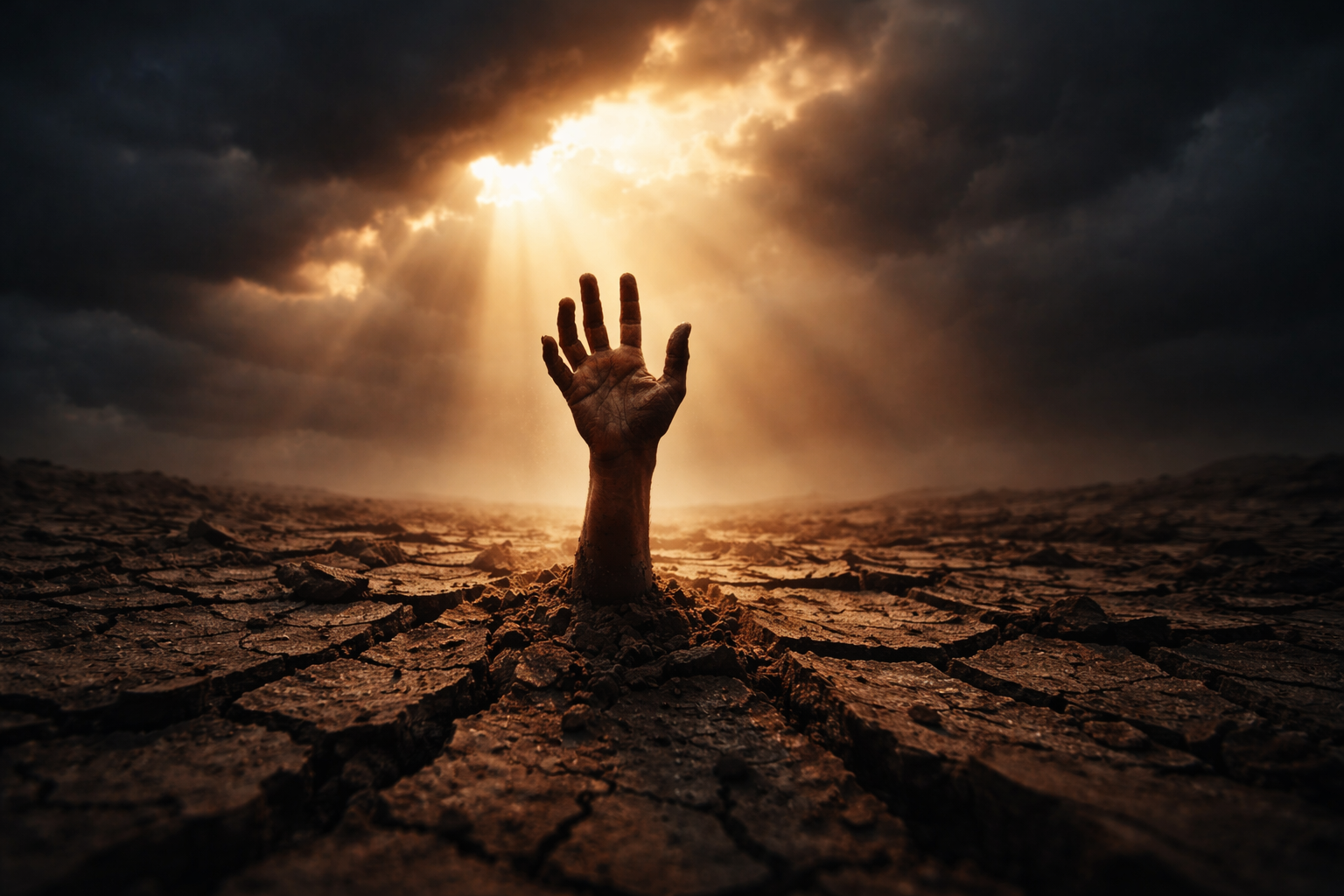
We are surrounded by risk. Every moment of every day, the sheer number of things that could go wrong is staggering. Cells divide by the billions. Planes take off and land. Cars merge at seventy miles an hour with nothing but a painted line separating them from oncoming traffic. Buildings stand under loads they were never designed to hold forever. Electrical systems hum behind walls. Hearts beat without being asked.
And yet, overwhelmingly, nothing happens.
We don't think about this. We move through our days with an assumed safety that we've never been promised and couldn't possibly earn. We call it "normal." But what if normal is actually the anomaly? What if the default state of a fallen world is disorder, and the fact that things hold together at all is the thing that demands an explanation?
The Inverted Question
When something goes wrong, we're stunned. A bridge collapses and it makes international news. A plane goes down and we grieve collectively. A diagnosis comes back and the first question is always the same: Why me?
It's a human question. An honest one. But it has the arrow pointing the wrong direction.
The harder theological question isn't "why do bad things happen?" It's "why does so much go right?" The sample size of events on any given day is enormous. Millions of flights, billions of cell divisions, trillions of mechanical and biological and chemical processes humming along without incident. Statistically, the frequency of catastrophic failure should be far higher than it is. We should be amazed not when something breaks, but when it doesn't.
And we are amazed, but only at the breaking. The holding together is invisible to us.
A World That Groans
Scripture doesn't sugarcoat the state of things. Paul writes in Romans 8 that the whole creation groans, subjected to futility, waiting for redemption. This is not a world running as designed. It is a world bent, fractured, moving toward entropy. Cancer is not a glitch in an otherwise perfect system. It is the system expressing its fallenness. Decay, disease, death: these are the native language of a world east of Eden.
So the real question isn't why suffering exists. Suffering is what you'd expect. The question is what holds back the flood.
In Him All Things Hold Together
Paul gives us the answer in Colossians 1:17: "In him all things hold together." This isn't a metaphor. It's a description of sustained, active, moment-by-moment grace operating at a scale we can barely comprehend. Every cell that divides correctly, every structure that stands, every system that functions is evidence not of luck or engineering alone, but of a God who has not yet let go.
This is what theologians call common grace, the unmerited sustaining of creation that falls on everyone regardless of faith or merit. The rain falls on the just and the unjust. And so does the quiet, invisible preservation that keeps the world from unraveling.
We live on the surface of this grace every single day and almost never look down.
The Psalm 81 Problem
Psalm 81 captures this dynamic with devastating clarity. God speaks through the psalmist, reminding Israel of what he did: "I relieved your shoulder of the burden; your hands were freed from the basket." The Hebrew word there, dud, carries a meaning far more severe than a wicker basket. Lexically, it can refer to a gravedigger's tool. The image isn't just manual labor. It's digging graves, possibly your own.
God's message to Israel is: I pulled you out of a death-system. Egypt wasn't just oppressive. It was a machinery designed to consume you. And I broke you free from it.
And then the turn: "But my people did not listen to my voice; Israel would not submit to me."
The pattern is ancient and relentless. God sustains, delivers, holds things together. And we forget. Not because we're malicious, but because preservation is quiet and suffering is loud. The bridge that holds doesn't make the news. The diagnosis that never comes doesn't prompt a prayer of thanks. We have built our entire sense of normalcy on top of an ocean of grace and we rarely look beneath the surface.
The Shattered Illusion
When suffering does break through, what it shatters isn't just our health or our plans. It shatters the illusion that safety was guaranteed. That we were owed a life without disruption. And the pain of that shattering is real. It is not something to theologize away in the moment.
But underneath the grief, there is a reframe available that is not cruel but honest: we were never promised a world without suffering. We were promised a God who sustains us in the midst of it. The person who receives the diagnosis and the person who doesn't are both living in the same fragile, groaning world. One of them just got a clearer look at it.
Counting the Mercies
The statistics of risk, honestly considered, are an argument for grace. Not in the cold, detached sense of running the numbers, but in the lived sense of pausing long enough to notice how much is going right that we never asked for and couldn't control.
Every day that the worst doesn't happen is not a neutral day. It is a day of active mercy. And when the worst does come, it comes not as evidence that God has abandoned us, but as a reminder that we live in a world that desperately needs the redemption it was promised.
The case for grace doesn't require extraordinary evidence. It just requires us to stop treating ordinary preservation as something we earned and start seeing it for what it is: the hand of God, holding all things together, one unremarkable, miraculous moment at a time.

Comments