Bearing Fruit in Its Season
Ezekiel 47:12 – “They will bear fruit every month because their water flows from the sanctuary, and their fruit will be for food and their leaves for healing.”
Fruit as a Test of What Is Truly Alive
I think it is interesting that the scriptures use the idea of bearing fruit to indicate goodness or life, particularly in that of the believer.
Matthew 7:16 – “You will recognize them by their fruits.”
As an aside, the scriptures also use this metaphor to provide a differentiation, but not in the way that most people think. Many assume that non‑believers, the unsaved, are the ones being described as non–fruit bearers. But a quick read of the context reveals that it is most often the “religious” who are the target of this claim.
Matthew 7:15–16 – “Beware of false prophets, who come to you in sheep’s clothing but inwardly are ravenous wolves. You will recognize them by their fruits. Are grapes gathered from thornbushes, or figs from thistles?”
Matthew 3:7–10 (ESV) – “But when he saw many of the Pharisees and Sadducees coming to his baptism, he said to them, ‘You brood of vipers! Who warned you to flee from the wrath to come? Bear fruit in keeping with repentance. And do not presume to say to yourselves, “We have Abraham as our father,” for I tell you, God is able from these stones to raise up children for Abraham. Even now the axe is laid to the root of the trees. Every tree therefore that does not bear good fruit is cut down and thrown into the fire.’”
The subject of the following however is not the religious hypocrites, it is the true and faithful followers of Christ.
Seasons in Creation and in the Believer’s Life
The use of fruit as an indicator of growth, proper nourishment, life, and—spiritually—connectedness with the Father and His will, carries additional meaning when we consider the cycle of all agriculture, including fruit‑bearing plants.
With every food crop there is a season:
- a season of death or lifelessness
- a season of growth
- a season of bearing fruit
Ecclesiastes bears witness to this:
Ecclesiastes 3:1–2 – “For everything there is a season, and a time for every matter under heaven… a time to plant, and a time to pluck up what is planted;”
Note from this example that the fruit is not consistently present to be harvested at every moment, but appears in due time.
If we overlay this pattern on the life of the believer, a few ideas emerge. Two in particular stand out:
- We do not always bear fruit. Like a fruit tree, we have seasons where we are seemingly dormant and lack visible progress, and other seasons where we are bearing fruit and making great strides toward the accomplishment of His will.
- We should be wary of those who appear to bear fruit consistently or without fail, as this does not line up with this pattern—or, more importantly, with the life of Christ.
The Seasons of Christ’s Earthly Life
As with all exegetical analysis, we can find our validation (or invalidation) in the patterns laid down by Christ in His time here on earth.
When we consider the fruit of Christ’s life and ministry, we see three parts.
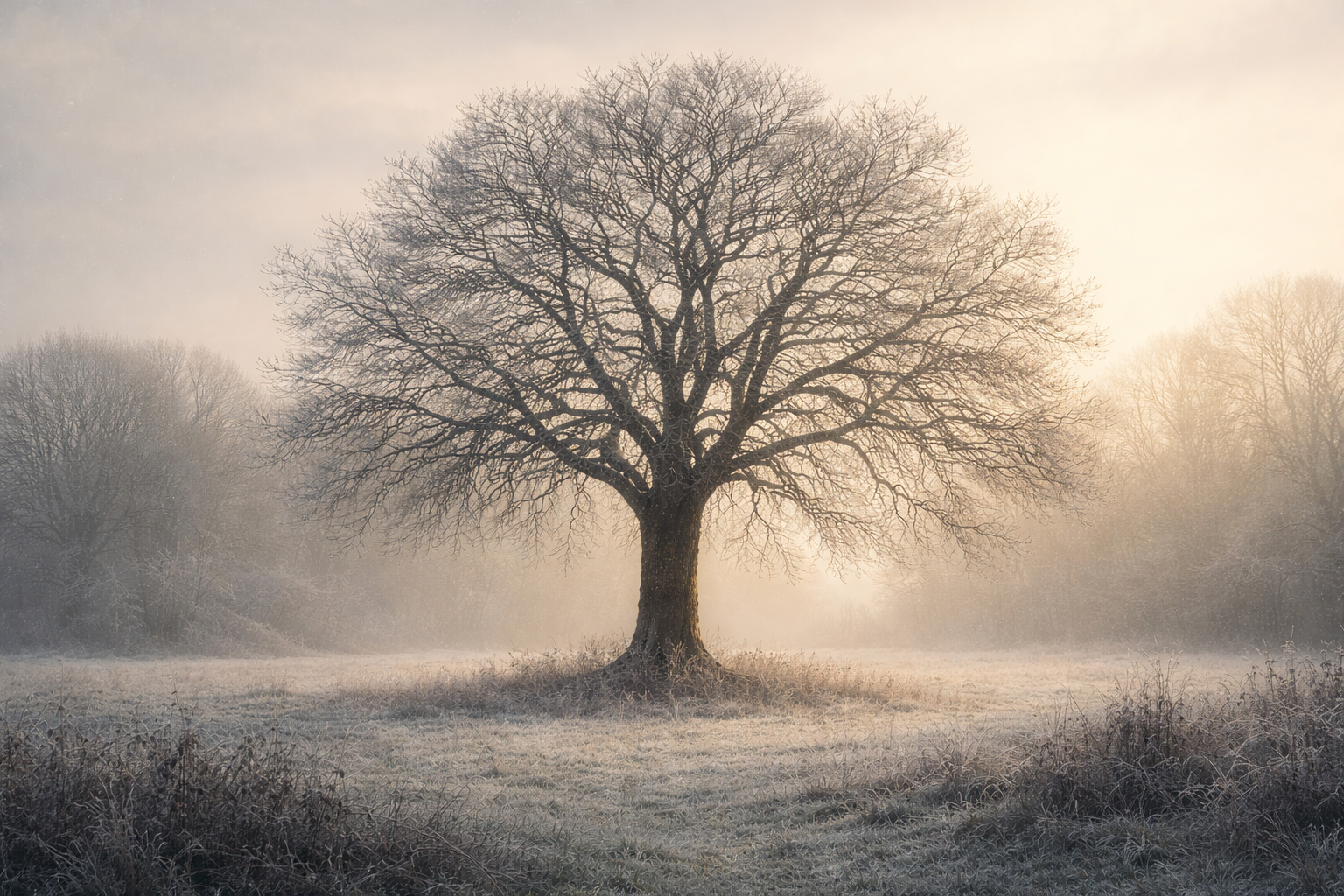
First, His early years. For roughly the first thirty years of His life, Christ was a nobody by human standards—an average worker earning a living. There are no accounts of great miracles, crowds flocking to Him, dramatic sacrifices, or any other notable events. Scripture is so limited in its interest in this portion of His life that it omits mention of it entirely after the nativity. If we overlay the notion of a plant’s lifecycle, one could say this was the winter of Christ’s life. No fruit is being borne, no apparent accomplishments toward the establishment of the kingdom of God. In terms of the great canon of history, Christ, as a man, might as well have been dead.
Then we see a sprig of growth. Christ appears on the scene; something is happening, though it is not yet clear, but it has the potential to be life‑changing. In the lifecycle overlay, this is the spring, the time when we see nature’s potential on full display. No fruit yet, but we can understand that it is coming.
Christ affirms this particularly at the wedding at Cana, where His mother Mary prompts Him toward a miracle and He responds:
John 2:4 – “Woman, what does this have to do with me? My hour has not yet come.”
Christ makes it clear that while He is now present in history, it is not yet time for Him to bear fruit. It is the springtime of His ministry.
At a certain point, we see Christ’s ministry take hold and fruit is borne: the lame walk, the blind see, lives are changed as truth is proclaimed, and ultimately Christ offers Himself in sacrifice on the cross. This is the ultimate harvest, where the culmination of His ministry, His growth cycle, and His fruit‑bearing comes to fruition.
As we can see, the pattern is not one of continual fruit‑bearing, but of moments in which we become vessels for God’s use and for life‑giving, life‑sustaining nourishment for others.
What This Means for the Believer
So what does this mean for the believer?
We should take heart that not every moment is meant to be filled with fruit or outwardly fruitful. We have, and rightly need, our seasons in order for God’s will to be done. This realization relieves a great deal of pressure, as there is no expectation that every day or every season will be miraculous or even notable. In fact, we know that many seasons feel like the opposite, when we are living on the fruit of others—sometimes because of our self‑imposed need, sometimes simply because God cares for us through the fruit He has given to others.
Putting It All Together
The God who authored the seasons in creation also authors the seasons of your life. The absence of visible fruit is not proof of His absence. Winter does not mean the tree is dead. It may simply mean that God is working below the surface in ways you cannot yet see.
Christ Himself walked through long years of obscurity, a time of growing visibility, and a focused season of harvest. If this was the pattern of His life, it should not surprise us when our own lives follow a similar rhythm.
Take a moment today to honestly name your season before God. Are you in what feels like winter, spring, or harvest?
Bring that season to Him in prayer, and then ask a simple question:
“Lord, what does faithfulness look like in this season?”
Take note of one concrete act of obedience, repentance, rest, or service that fits where you actually are—not where you think you should be. Then do that one thing, trusting that the God who brings fruit in its time will also bring it in yours.



Comments