1 Kings 19:4 (NASB 2020)
4 But he himself went a day's journey into the wilderness, and came and sat down under a broom tree; and he asked for himself to die, and said, "Enough! Now, Lord, take my life, for I am no better than my fathers."
Broom tree or besom (רֹתֶם). Besom is a broom of destruction, a Near Eastern metaphor signifying total annihilation, a sweeping away.
This bears significance in that Elijah, having been threatened with his life, following on the heels of the death, the annihilation of every one of his brother prophets, would find shelter under the symbol of the fate that is playing out for all that he represents, namely God Himself. He asked for his life at that moment, not to be saved, but to be taken. Here is a man totally defeated and assuming it is the end. He not only finds shade in this place but also finds rest.
This scene is pregnant with truths. One is that it represents the safety in a defeatist position. There is security in assuming the worst, in giving up, for one cannot possibly be let down. If the worst does not happen, that is simply upside. But God is at work and, true to form, meets us when all is lost. It is not with excess, but exactly what we need at that moment. Elijah would take a journey, and his immediate need was sustenance. God provided it.
But that is a trivial reading of what is obviously a larger theme. The purge of the prophets represented a purge of the voice of God, a purge of the truth, a nation resigned to ignorance through silencing God's voice. They were cleaning house, replacing God with idols, things that are like God, but not God, things that align with their "moral compass," allowing for the sin that alienates them from God and, worse, from the knowledge that they are alienated at all.
Elijah's statement, "I am no better than my fathers," carries particular weight. It is not easy to be the only one left standing. In some cases it can be a symbol of success, that you made it while all others failed, but it can also mean that the wave of destruction coming for you has tremendous odds in its favor given its success, and so you have little chance to survive. Obviously, Elijah was on the latter side. So what did he mean when he states, "I am no better"? Here we have a prophet of Israel, some would say the prophet of Israel, the one elected to bear God's standard to the nation, to turn it from its sins, to restore it to a right relationship with God. How could he say he was like his fathers? Surely he was something greater. But that is the case with ministry and most human endeavor. No matter how much it seems God's wind is at your back, no matter how many miraculous deeds or successes, no matter how clear the case has been made that you are God's man or woman, we all come to the end of ourselves and cry out, "I am not special." I am just a fallen creation, just like my fathers, just like my peers.
I would imagine this was on Elijah's heart, that here he had been charged with being a messenger to the nation of Israel and, contrary to the intended goal, the messengers and seemingly God Himself were being rejected and wiped out. There is a lesson in the simplicity of God's immediate response that resonates with me, and I am sure with many other believers. It is a practice that sustains us in good times and bad and should always be our instinctive reaction. God did not come to Elijah and reassure him. He did not appear in visions and dreams. He did not declare, "Fear not, Elijah, for I am going to turn this thing around and you will not die, but instead be a major player in it." Instead, God said, "Eat." In that gesture, God gave us the pattern for stability and success no matter what our circumstance. It was simply: do the thing that is in front of you to do. Don't focus on the greater outcome, the greater circumstance. You need to eat, so eat. I have plans for you, a great journey, but for now, focus on eating.
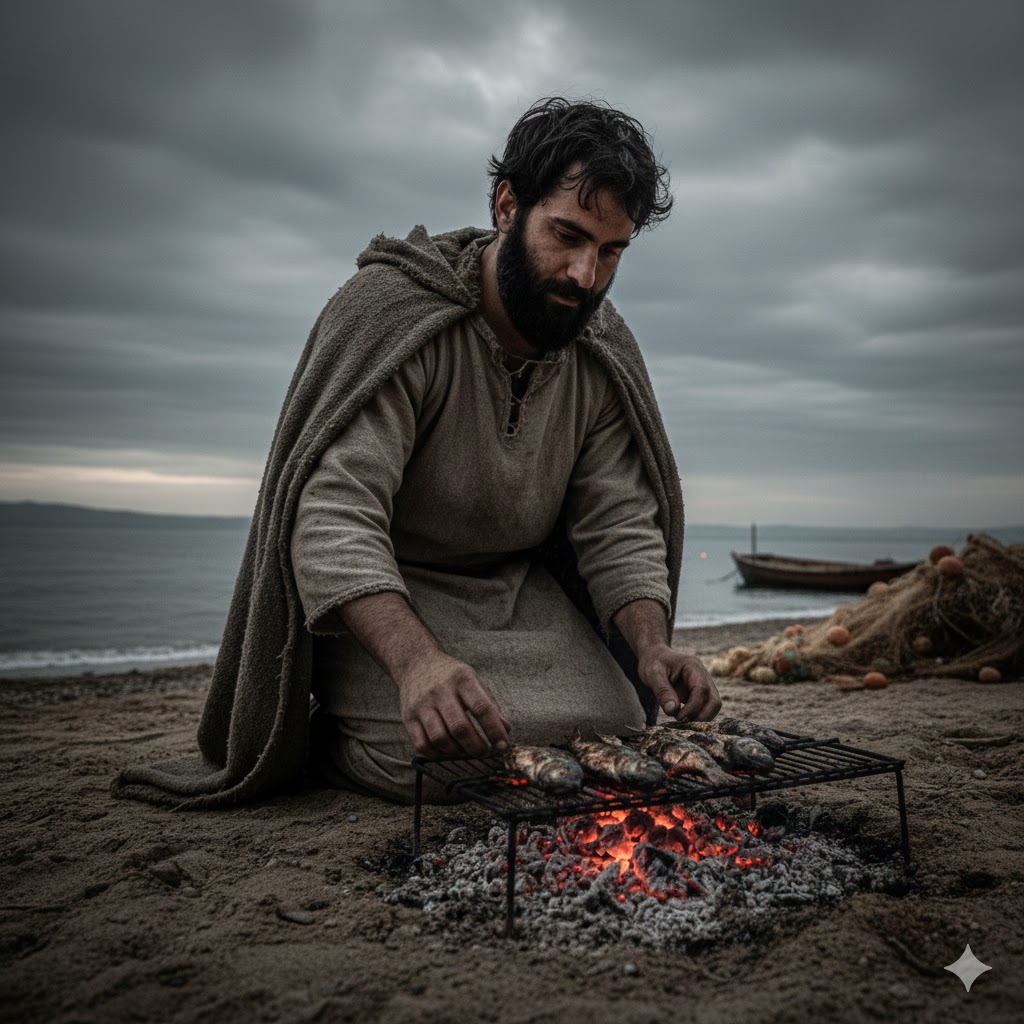
This reminds me of the time after Jesus' resurrection, in one of the instances He appeared to the disciples. They were out fishing, and He appeared on the shore. The simplicity of Christ's actions was startling: He was cooking breakfast. There are many fitting things Christ could have been doing at that time meeting His disciples, like scheming and planning, laying out the strategy and vision for the kingdom, but what did He say? "Want some breakfast?"
The message here is that we need to take our time, for the journey is truly long and the path is harrowing. And in that taking of our time, we must simply slow down and do what comes next, being mindful of what is ahead, but maintaining focus on the simple task before us. "Whatever your hand finds to do, do it with all your might."



Comments